


How Topic-Based Web Directories Help Organize Digital InformationHow Topic-Based Web Directories Help Organize Digital Information

Descriptive labels help people judge where a link will lead before they click. Research guidance from Nielsen Norman Group calls these clues “information scent,” explaining how wording and context guide navigation. Topic-based web directories apply this principle by grouping related websites under recognizable headings. For students, researchers, and everyday internet users, those categories provide a starting point when the right search terms are unclear.
A categorized collection such as an Online Resource Directory ( 온라인 자료 디렉토리) illustrates this approach through sections covering education, public services, document tools, and other subjects. The linked site, Juso On-gil (주소온길), presents website descriptions alongside topic categories. This makes it an example of organized discovery, rather than evidence that every listed service is suitable for every reader. Each destination still deserves its own assessment.
Categories Give Browsing a Clear Direction
A useful category should answer a simple question: what will I find here? Labels such as “Online Learning” or “Document Tools” provide more direction than vague headings such as “Resources.” Nielsen Norman Group explains that specific link names help users understand their options without relying too heavily on surrounding context. Familiar language matters especially when visitors know little about a subject.
Consider someone looking for help editing a PDF. They might begin with a document category, compare descriptions, and then visit a relevant provider. This is a suggested browsing route, rather than a guarantee of success. The directory’s practical value lies in making the next choice understandable. A category should narrow the task without requiring readers to understand how the collection was built.
Directories, Search Engines, and Bookmarks Serve Different Purposes
A search engine begins with a query and retrieves information from its index. Google Search Central describes three main stages: crawling pages, indexing their contents, and serving relevant results. Google also states that most pages enter its results through automated discovery rather than manual submission. This differs from browsing a directory’s visible collection of subject groups and selected links.
Search is useful when the question is specific. A directory offers another route when the reader wants to explore a field or identify possible starting points. These approaches can work together. Someone researching online courses could browse an education category first, then search for a particular institution’s admission requirements. Neither route removes the need to assess the information found.
Bookmarks support returning to pages already selected. Mozilla describes them as saved links and explains how Firefox users can organize them with folders and tags. A directory introduces a collection assembled for visitors, while a personal bookmark collection reflects its owner’s choices. After checking a useful destination, saving the original page can make future visits more direct.
Editorial Selection Needs Visible Standards
Selection deserves scrutiny because inclusion alone does not explain why a resource belongs in a collection. Readers should look for an editorial policy, a named operator, and an explanation of listing criteria. Helpful questions include whether submissions receive review, whether paid placements are identified, and whether descriptions distinguish observed features from opinions. Treat missing explanations as a reason to investigate further.
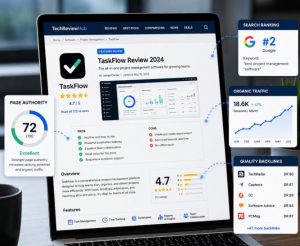
The University of Texas at Austin Libraries recommends evaluating online information through currency, relevance, authority, accuracy, and purpose. These criteria provide a useful lens for examining directory entries too. Readers interested in a website’s wider connections can also explore how backlink networks relate to website influence. However, network visibility should be considered separately from the accuracy of an individual listing. Check who wrote the description and what evidence supports it.
For example, a software listing should distinguish a developer’s published feature claims from an editor’s direct testing. If a directory says a tool supports a particular file type, check the provider’s documentation before relying on that capability. Prefer descriptions that acknowledge limits and explain their evidence. A short, transparent entry is more useful for assessment than an unexplained claim of superiority.
Outdated Listings Can Undermine a Useful Collection
Web information does not remain accessible indefinitely. A 2024 study from Pew Research Center found that 38% of sampled webpages that existed in 2013 were no longer accessible a decade later. The finding concerns the wider web, rather than directories specifically. Still, it demonstrates why a collection of links requires ongoing attention instead of a single round of selection.
When assessing a listing, distinguish a working link from a verified description. Open the destination and check whether it still matches the summary. Look for a review date, but ask what was reviewed. A successful connection check should not be treated as proof that pricing, eligibility, features, or ownership details remain accurate. Those details need separate confirmation at the destination.
Follow the Link, Then Check the Evidence
Directories are best treated as starting points for investigation. Virginia Commonwealth University Libraries advises readers to identify authors, examine publication dates, and trace claims to original sources. For a directory user, that means following a listing beyond its summary. Consult the actual report, official service page, or product documentation before quoting information or making a decision based on it.
A practical routine is to browse a relevant category, read the description, open the original source, and verify what matters. Save the destination after that review. As online collections evolve, their usefulness should be judged by clear organization, transparent selection, and careful maintenance. Topic-based directories can make discovery manageable, while informed readers supply the judgment that a category label cannot provide.











 Google Partners get access to a wealth of training materials and Google-provided assistance. This results in a thorough understanding of the most recent Google Ads features and best practices. Non-partner agencies might not have this degree of specific training.
 Data analytics is revolutionizing both the way games are played and their broadcast. Modern tracking technology and artificial intelligence algorithms give broadcasters insightful analysis of team plans, player performance, and game patterns.


 Fast forward to 2012, and significant UK broadcasters joined forces with broadband companies to create YouView. This collaboration aimed to shake things up in the TV market, offering yet another IPTV option for viewers. YouView combined IPTV and catch-up TV services into one set-top box, making it easier to watch many different types of material.


 Although IPTV companies offer services and products similar to traditional broadcasters, they are different because they do not use conventional on-site servers or computers and physical cables and phone lines. IPTV operators use cloud servers or remote servers who run their operations in a virtual or cloud environment.


